

This is not a joke.
I actually built a food tracking app while I was chopping wood.
Now, to be clear, I did not just open an AI agent and say, “build me a food tracking app,” then disappear into the forest like some kind of Canadian tech wizard. There was a lot more to it than that.
But the actual execution of the app, the part where the thing was being built, happened while I was outside splitting logs. I was checking my phone between rounds of chopping wood, sending voice memos to my AI Agent Hanz, telling him to start the next phase, review what he had just built, check it against the requirements, do QA, and just moving the project along.
By the end of the day, I had a working food tracking app on my phone.
That still feels pretty crazy to me.
Why I Wanted to Build a Food Tracker
I have been focusing more on my health lately.
More specifically, I have been paying attention to how much protein I eat. I have been exercising more, and my wife has been telling me that I need to pay more attention to how much protein I eat. So I started thinking more about what I eat during the day.
As part of this whole health project, I created a Hermes profile called Arnold. Arnold is basically a health consultant agent for me and my wife. He can look at our medical reports, Garmin watch data and other health information we give him.
Last week, I was talking to a friend of mine who is more into fitness than I am. I was telling him about this, and he showed me the food tracking app he uses to track his meals, snacks, calories, protein and all that stuff.
When my friend showed me the app, I thought: maybe I can build something similar with my agents so that Arnold can track what we’re eating?
I asked my friend to send me a screenshot of the main screen of his food tracking app.
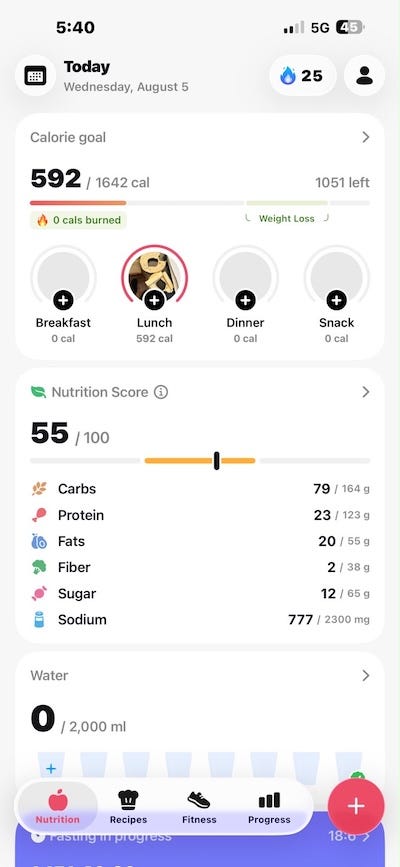
But why build my own app when there are lots of food tracking apps available?
The main reason is that I didn’t just want a food tracker. I wanted something that could eventually connect into the health setup we are already building for our family so that Arnold can easily access and update the data.
Also, why not?
I was going to my cottage for the weekend. I had wood to chop. It sounded like a fun little weekend project.
Designing the App
My friend’s app was way more sophisticated than what I needed.
It tracks food, water, fitness and a bunch of other things. I didn’t need all of that. I wanted something simpler. I wanted to log breakfast, lunch, dinner and snacks. I mainly cared about protein, but if I was already tracking that, I figured I might as well track calories, carbs, fat, sodium, fiber and the other basic nutritional info.
We built Vacation Tracker. We built Competitor Tracker. Now I am building Food Tracker. I guess I just like trackers. 😄
Anyway, I took the screenshot from my friend’s app and brought it into Claude Design. I told it that I wanted to simplify the app and make my own version of it. A simple mobile app for tracking meals and nutrition. We went back and forth a bit until I was happy with the design.
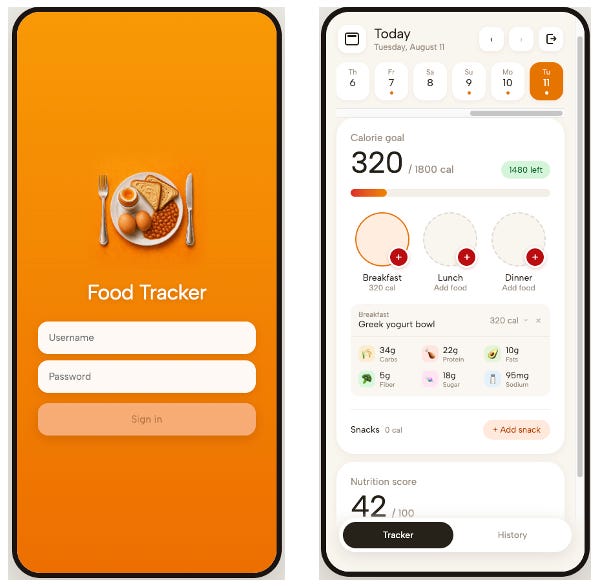
I didn’t need to start from a blank page. I had a visual reference, I explained what I wanted to change, and Claude Design helped me turn that into something closer to the app I actually wanted.
Once the design was done, I asked Claude Design to package everything so Hanz could use it to build a native iOS app.
Then I went to ChatGPT to create the app icon, because I still think ChatGPT is the best tool for image generation.
So by the end of the design phase, I had two things:
the app design package from Claude Design
the app icon from ChatGPT
That was enough to move into the planning stage for the app.

Planning With Hanz
The planning phase was the key part. This is what made the chopping wood part possible.
I went to Hanz, who is the agent I use for software development. Out of all my agents, Hanz is the one I trust the most with software development. We’ve built a bunch of small software projects together already, and over time he has developed and improved the skills needed to do software development properly.

So I gave him the design package, the app icon and the basic requirements. I told him we were going to build this app over the weekend, but first I wanted him to act like a product manager. I didn’t want him to just start coding. I told him to review the design, review the requirements, and ask me questions about anything that was unclear.
He came back with questions around the actual product: who would use it, whether this was private or public, what we should track in version one, how Arnold should access the data, how photos should work, what should happen if the AI estimate fails, and a few other questions.
After I answered the questions, Hanz created the plan. Then I made him revise the plan. Then I made him revise it again.
A lot of my work in this phase was not me writing the plan myself. It was me pushing Hanz to think harder. I asked questions like: Are you sure this is the best plan? Did you review the design properly? Are there gaps between what I told you and what the design shows? Is anything missing?
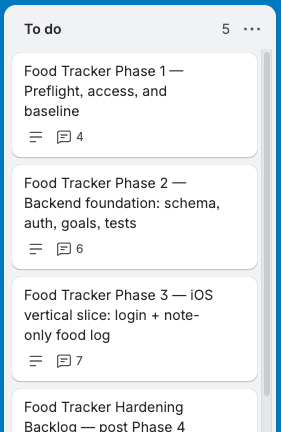
Once the plan felt good enough, I told him to break it into phases. Then I told him to break each phase into steps. After that, we moved everything into Trello.
For this project, each phase became its own Trello card. We ended up with six phases, each broken into steps, with the relevant design files and app icon attached where they were needed. Then I made Hanz review the phase breakdown again a couple of times.
Prep Work
The next thing I asked Hanz was to tell me everything he needed from me before he started building.
I didn’t want to be at the cottage the next day, covered in sawdust, and have Hanz ask me for some account access or API key or software installation that I could only do from his Mac Mini in Montreal. So I told him to make a list of blockers.
We decided to use Cloudflare for the backend because we are already using Cloudflare for Competitor Tracker (check my partner Slobodan’s excellent article on how we built Competitor Tracker). And this app only needed a simple backend for the iOS app to connect to. I'm not going to get into all the technical details because that’s not the point of this article. The point is that Hanz told me what he needed, and I got it ready.
There was the Cloudflare account and API setup. The Apple Developer account setup. There was the TestFlight setup so I could install the app on my phone. There was Xcode, which is the tool you need to build iOS apps. Hanz’s computer is a Mac mini in Montreal, and I was going to be at the cottage, so anything that had to be done on that computer needed to happen before I left.
I'm kind of a technical person, but I'm not a programmer. A lot of this was just Hanz guiding me through things. I would send him a screenshot and say, “Here is what I see. What do I do next?” And he would tell me what to click or what to set up. Then I would send another screenshot. Then he would tell me the next step.
That was basically the process for a lot of the Xcode, Apple Developer and Cloudflare setup. I didn’t always know exactly what I was doing. Hanz did though. And my job was to follow instructions, get him the access he needed, and remove the blockers before getting started with building the app.
Building the App
On Saturday morning, I was at the cottage with my friend, and we had a bunch of wood that needed to be chopped and logs that needed to be split. So I told Hanz to start phase one.
Then I went outside.
When phase one was done, I checked my phone and sent him a voice memo telling him to review the phase, check it against the specs, make sure nothing was missed, and do proper QA.
Then we moved to phase two. Same thing. Build the phase. Review the phase. Check it against the requirements. Make sure it works with phase one. Do QA. Then move on.
That was basically the pattern for the day. We went through all six phases of the project like that. While I was chopping wood, I was checking my phone and sending voice memos.
This was actually the easiest part of the whole project and what made it possible was the planning and prep work we had done the day before. So Hanz could just work and I could keep chopping.
End Result
By the time phase six was finished, I had a working app ready. I installed it through TestFlight and tested it on my phone. There were a couple of small bugs and rough edges, so I worked through those with Hanz in the evening. I sent the app to my wife too, and she gave me a couple of pieces of feedback. Most of them were not really Hanz making mistakes. They were things I had missed when I was mapping out the project.
On Sunday afternoon, I had a working food tracker that my wife and I could use to track meals and snacks and to which Arnold can connect through an API and look at what we’ve been eating.
That was the whole reason I wanted to build my own version in the first place.
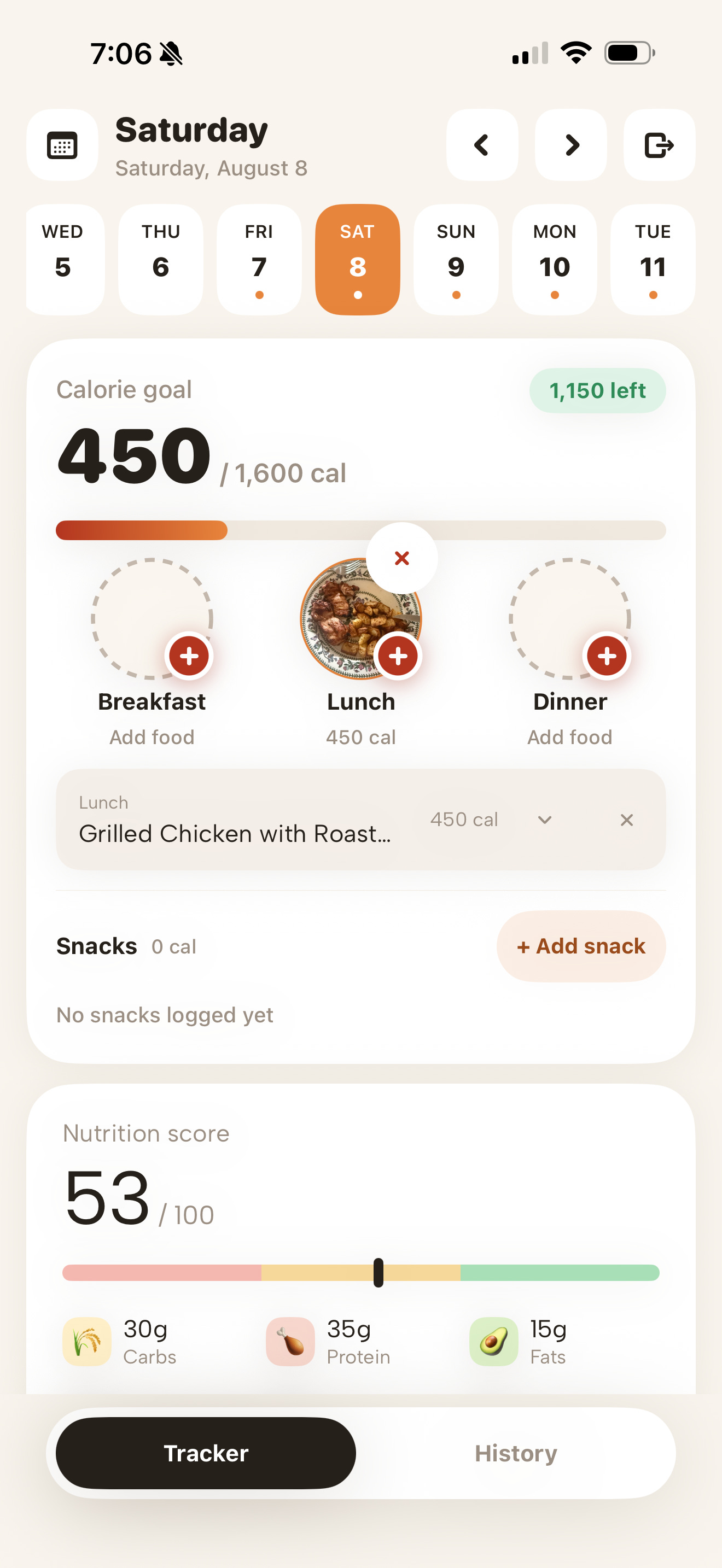
I used to run a software development agency. A project like this would have taken an order of magnitude more time 10 years ago. You would need a developer, probably a project manager, some QA, some back and forth, and much more overhead.
I don’t want to make this sound easier than it is. You can’t just one-shot something like what Hanz and I did last weekend. I didn’t type “build me a food tracking app” and then wake up with a perfect app on my phone. We followed a structured process to create this app.
But even with that in mind, this was still ended up being a two-day project. One day of planning and prep while I was doing my normal work and sitting in meetings. One day of execution while I was chopping wood. Then a couple of hours of small improvements after we actually used the app.
A few short years ago, this would have been impossible for me to do on my own.
Now I have a fully functional food tracking app for my family that I created as a weekend project, thanks to my trusty AI agent Hanz.
What a time to be alive.